
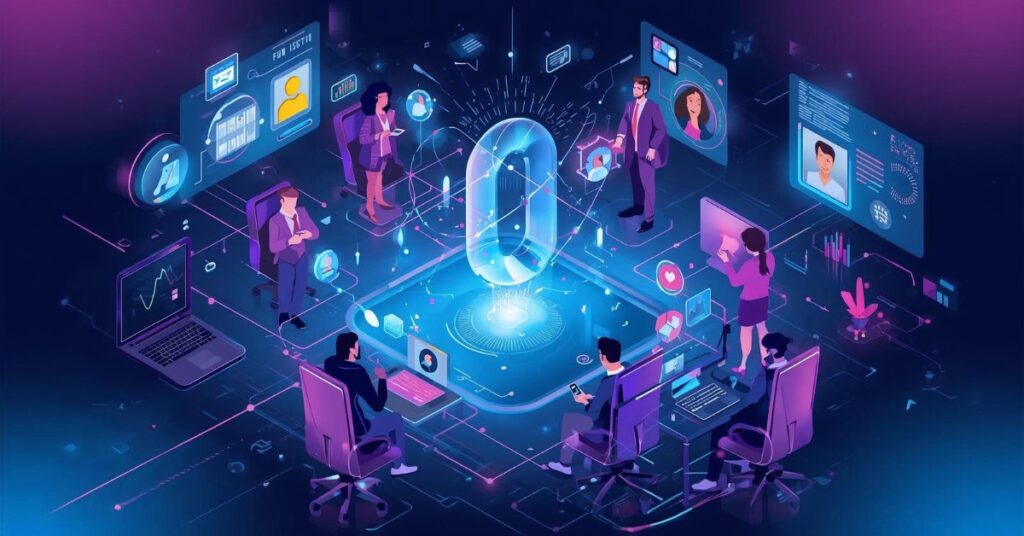
Remote work is no longer a temporary trend. It has become a permanent part of how modern organizations operate. Companies across the world now manage distributed teams, virtual meetings, cloud-based workflows, and global collaboration. While remote work offers flexibility and access to global talent, it also introduces challenges such as communication gaps, productivity tracking, employee engagement, and coordination across time zones.
Artificial Intelligence (AI) is playing an increasingly critical role in solving these challenges. From intelligent scheduling to virtual collaboration assistants, AI is reshaping how teams work together when they are not physically in the same place. As AI continues to evolve, its impact on remote work and collaboration will become even more significant.
This article explores how AI is transforming remote work today, what changes we can expect in the future, and how businesses and employees can prepare for an AI-driven collaborative environment.
Why Remote Work Needs AI
Remote work environments generate massive amounts of digital data every day. Emails, chat messages, video calls, documents, task updates, and performance metrics all contribute to a complex workflow. Managing this information manually can be inefficient and overwhelming.
AI helps remote teams by,
- Automating repetitive administrative tasks
- Improving communication clarity
- Enhancing productivity and focus
- Supporting better decision-making
- Reducing collaboration friction
By handling routine processes, AI allows humans to focus on creative, strategic, and interpersonal work.
AI-Powered Communication in Remote Teams
Smarter Email and Messaging Assistance
AI tools already assist remote workers by drafting emails, summarizing long conversations, and suggesting replies. In the future, these systems will become more context-aware, understanding not just words but intent and urgency.
AI will be able to,
- Prioritize important messages automatically
- Summarize entire email threads into key points
- Detect misunderstandings or unclear communication
- Suggest tone adjustments for professional clarity
This reduces miscommunication and saves time spent reading and writing messages.
Real-Time Language Translation
As remote teams become more global, language barriers are a major challenge. AI-powered real-time translation tools are rapidly improving, allowing team members to communicate naturally in their own languages.
Future AI collaboration tools will,
- Translate meetings in real time
- Preserve tone and context during translation
- Enable multilingual document collaboration
This will make international collaboration smoother and more inclusive.
AI and Virtual Meetings
Meeting Summaries and Action Items
AI-powered meeting assistants can already record, transcribe, and summarize meetings. In the future, these systems will become more intelligent by identifying
- Key decisions made during meetings
- Assigned tasks and deadlines
- Follow-up actions and responsibilities
Instead of manually taking notes, team members will receive clear summaries and task lists automatically.
Improved Meeting Productivity
AI can analyze meeting patterns to determine
- Which meetings are unnecessary
- Who speaks the most or least
- Whether meetings lead to actionable outcomes
Organizations can then optimize meeting schedules, reduce time waste, and improve collaboration quality.
AI in Task Management and Workflow Automation
Intelligent Task Prioritization
Remote workers often struggle with managing tasks across multiple tools and platforms. AI-driven project management systems can analyze workload, deadlines, and dependencies to recommend task priorities.
Future AI systems will
- Automatically reorder tasks based on urgency and impact
- Adjust timelines based on real-time progress
- Alert teams about potential delays before they happen
This leads to smoother workflows and fewer last-minute emergencies.
Automation of Repetitive Work
AI can automate tasks such as,
- Data entry
- File organization
- Report generation
- Status updates
By reducing manual work, employees gain more time for problem-solving and innovation.
AI and Employee Productivity Monitoring
Data-Driven Performance Insights
One of the biggest challenges of remote work is measuring productivity without micromanaging employees. AI offers a balanced solution by analyzing work patterns rather than surveillance.
AI can provide insights such as,
- Time spent on different tasks
- Workflow bottlenecks
- Collaboration effectiveness
These insights help managers support employees rather than control them.
Personalized Productivity Recommendations
Future AI tools will act as personal productivity coaches. They will analyze individual work habits and suggest improvements such as
- Optimal work hours based on focus patterns
- Break reminders to prevent burnout
- Task batching strategies
This personalized support promotes healthier and more sustainable remote work.
AI-Driven Collaboration Platforms
Smarter Document Collaboration
AI is transforming how teams collaborate on documents. Instead of static editing, AI-powered platforms will
- Suggest content improvements
- Detect inconsistencies
- Ensure version control automatically
Teams will collaborate faster with fewer errors and less confusion.
Context-Aware Collaboration
Future AI systems will understand project context deeply. When a team member joins a project, AI can provide,
- A summary of project history
- Key decisions made so far
- Current priorities and risks
This reduces onboarding time and improves team alignment.
AI and Team Engagement in Remote Work
Detecting Burnout and Disengagement
Remote work can sometimes lead to isolation and burnout. AI can analyze communication patterns, work intensity, and engagement levels to identify early warning signs.
AI systems may detect,
- Reduced communication frequency
- Sudden drops in productivity
- Negative sentiment in messages
Managers can then intervene early with support, preventing long-term disengagement.
Enhancing Team Culture Remotely
AI can help maintain team culture by,
- Recommending virtual team-building activities
- Highlighting employee achievements
- Encouraging balanced workloads
These features help remote teams feel connected despite physical distance.
AI and Security in Remote Collaboration
Remote work increases cybersecurity risks due to distributed access points and cloud-based systems. AI plays a crucial role in protecting remote collaboration environments.
AI-driven security systems can
- Detect unusual login behavior
- Identify phishing attempts
- Prevent data leaks
- Enforce access controls intelligently
As cyber threats grow more complex, AI will be essential for maintaining secure remote operations.
The Future Role of AI Assistants at Work
AI assistants will evolve from simple helpers into intelligent workplace partners. They will
- Manage schedules across time zones
- Coordinate meetings automatically
- Track project progress continuously
- Answer questions about policies, tools, or workflows
Instead of replacing employees, AI assistants will enhance productivity and reduce cognitive overload.
Challenges and Ethical Considerations
Despite its benefits, AI in remote work raises important concerns,
- Privacy issues related to data collection
- Risk of excessive monitoring
- Bias in AI-driven performance evaluations
- Dependence on automated decision-making
Organizations must adopt ethical AI practices, ensuring transparency, fairness, and respect for employee privacy.
How Businesses Can Prepare for AI-Driven Remote Work
To fully benefit from AI in remote collaboration, organizations should,
- Invest in employee AI literacy
- Choose AI tools aligned with business goals
- Establish clear ethical guidelines
- Combine AI insights with human judgment
- Encourage feedback from employees
AI should empower teams, not control them.
Conclusion
The future of remote work and collaboration is deeply intertwined with artificial intelligence. AI is already improving communication, productivity, security, and engagement for distributed teams. As these technologies advance, remote work will become more efficient, more inclusive, and more human-centered rather than less.
Organizations that embrace AI thoughtfully will gain a competitive advantage by creating flexible, productive, and resilient work environments. Employees, in turn, will benefit from reduced workload stress, better collaboration, and more meaningful work. AI is not replacing collaboration,it is redefining how collaboration works in a digital-first world