
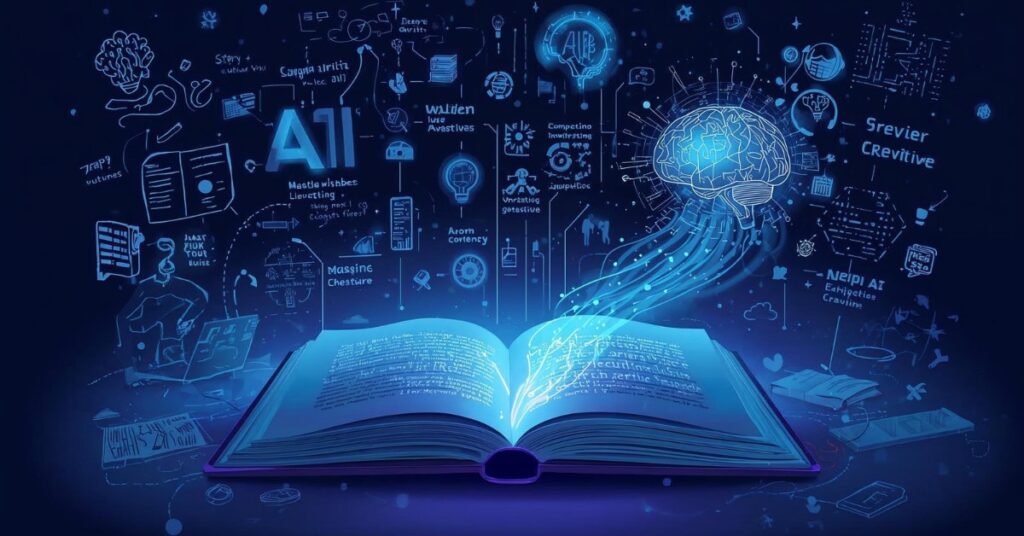
For centuries, writing a book has been seen as one of the most personal and creative achievements of human expression. Authors pour their experiences, emotions, and imagination into stories that shape culture and inspire generations. Today, with the rise of Artificial Intelligence, a new question has entered the literary world, Can AI write a book?
The short answer is yes, AI can help write a book. But the deeper and more important question is how well, in what role, and with what limitations. AI is not replacing authors, but it is reshaping how books are planned, drafted, edited, and even published.
This article explores what AI can really do in book writing, where it shines, where it struggles, and how writers can use it responsibly and creatively.
What Does It Mean for AI to Write a Book?
When people hear “AI writing a book,” they often imagine a machine sitting alone creating a full novel from start to finish. In reality, AI works differently.
AI writes by,
- Analyzing huge amounts of text
- Learning patterns in language, structure, and storytelling
- Predicting what words and sentences should come next
This means AI does not think, feel, or experience the world. It generates text based on patterns, not emotions or real-life understanding. Still, these abilities allow AI to assist in many parts of the book-writing process.
Ways AI Is Already Helping Write Books
AI is already being used by authors in practical, powerful ways.
1. Idea Generation and Brainstorming
Many writers struggle with,
- Finding story ideas
- Developing plots
- Creating unique settings
AI can generate,
- Story concepts
- Character backstories
- Plot twists
- World-building details
A writer might ask AI for ten fantasy story ideas or character profiles, then choose one and develop it further.
2. Outlining and Structure
Writing a full book requires structure. AI can help create,
- Chapter outlines
- Story arcs
- Three-act structures
- Non-fiction book frameworks
This saves time and gives writers a clear roadmap before writing even begins.
3. Drafting Chapters
AI can write,
- First drafts
- Scene descriptions
- Dialogue samples
- Explanations for non-fiction books
Many authors use AI to create rough drafts, then rewrite them in their own voice. This speeds up the writing process without sacrificing creativity.
4. Editing and Rewriting
AI is especially useful for,
- Grammar correction
- Improving clarity
- Simplifying complex sentences
- Rewriting paragraphs in different tones
This makes AI an excellent editing partner, especially for beginners or non-native English writers.
Can AI Write a Full Book Alone?
Technically, yes. AI can generate an entire book if given enough instructions. There are already examples of,
- AI-written short story collections
- AI-generated poetry books
- AI-assisted non-fiction guides
However, fully AI-written books usually face problems,
- Lack of emotional depth
- Repetitive language patterns
- Weak character development
- Generic storytelling
- Inconsistent tone
These books may function as content, but rarely succeed as literature.
That is why most successful AI-assisted books today follow a human + AI collaboration model.
Where AI Excels in Book Writing
AI performs best in areas that require speed, structure, and consistency.
AI is great at,
- Generating large amounts of text quickly
- Following instructions precisely
- Maintaining consistency in terminology
- Rewriting content in different styles
- Creating summaries and explanations
This makes AI especially useful for,
- Educational books
- Self-help guides
- Business and marketing books
- Technical manuals
- Children’s stories with simple structure
Where AI Struggles
Despite its power, AI has clear limitations.
AI struggles with,
- Deep emotional storytelling
- Authentic human dialogue
- Cultural sensitivity
- Humor and sarcasm
- Moral complexity
- Original life experiences
AI cannot understand heartbreak, ambition, fear, love, or hope. It can describe them, but it does not feel them. That difference matters greatly in novels, memoirs, and meaningful storytelling.
Human Creativity vs AI Efficiency
The real strength of AI in writing is not competition but collaboration.
Think of the roles like this,
- Humans provide – vision, emotion, meaning, purpose
- AI provides – speed, structure, consistency, assistance
Together, they create something more powerful than either could alone.
How Authors Are Using AI Today
Writers across the world are using AI in different ways,
Fiction Writers
- Use AI to brainstorm plots and characters
- Generate alternative endings
- Improve pacing and dialogue
Non-Fiction Authors
- Create outlines quickly
- Draft chapters faster
- Simplify complex explanations
Self-Publishers
- Use AI to speed up production
- Write multiple books per year
- Test different genres
Educators
- Create study guides
- Rewrite content for different reading levels
- Produce learning materials faster
Ethical and Creative Concerns
With AI writing becoming common, important questions arise.
1. Authorship
Who is the author when AI writes part of the book?
Most experts agree – the human who directs, edits, and publishes remains the author.
2. Originality
AI learns from existing books. Writers must ensure,
- They do not copy specific works
- They add personal insight
- They avoid plagiarism
3. Transparency
Some readers want to know,
- Was this book written by a human?
- Was AI involved?
Many authors now openly state that AI was used as a tool, just like a word processor or editor.
Can AI Replace Authors?
No. AI cannot replace human authors because writing is not only about producing text. It is about,
- Understanding human experience
- Expressing emotions
- Sharing unique perspectives
- Creating meaning
AI can assist, but it cannot live life. And stories come from life.
Instead of replacing authors, AI is becoming,
- A writing assistant
- A productivity booster
- A creative partner
The Future of AI in Book Writing
In the coming years, we can expect,
- AI co-author tools built into writing software
- Voice-based storytelling systems
- Real-time story suggestions
- Personalized book creation
- AI editors that understand your style
Authors will not compete with AI. They will work with AI.
Those who learn to use it effectively will,
- Write faster
- Publish more
- Experiment more
- Reach wider audiences
How You Can Use AI to Write a Book
If you want to start writing a book with AI, here is a practical approach
Step 1 – Define your idea
Know your genre, audience, and goal.
Step 2 – Use AI for structure
Create outlines and chapter plans.
Step 3 – Draft with AI support
Generate rough content and rewrite in your own voice.
Step 4 – Edit carefully
Use AI for grammar and clarity, but apply human judgment.
Step 5 – Add your story
Your experiences, thoughts, and emotions are what make the book real.
Conclusion
So, can AI write a book?
Yes, AI can help write a book.
But only humans can give a book a soul.
AI is not the future author. It is the future assistant. A powerful one.
Writers who embrace AI as a tool rather than fear it as a competitor will discover new levels of creativity, productivity, and possibility. The best books of the future will not be written by humans alone or machines alone, but by humans who know how to work with machines.
In the end, storytelling remains a deeply human act. AI may help hold the pen, but humans still hold the story.